Freight and Logistics News and Market Update

Week of January 7, 2026
Top Takeaways
Capacity management, policy shifts and cautious demand shape early 2026 trade dynamics
true
- As US import growth slows and trans-Pacific volumes remain soft, carriers are focused on managing capacity to support rates. While a potential return to Suez transits could temporarily absorb some capacity through European congestion, forecasts still point to challenging market conditions next year.
- Tighter US de minimis enforcement is redirecting China-origin parcels through Southeast Asia, increasing transit times and logistics complexity, while aircraft groundings and delivery delays are tightening capacity on Asia–US lanes and contributing to more uneven demand patterns.
- US retailers are managing inventories cautiously ahead of Lunar New Year, leaving carriers focused on maintaining rate stability rather than pursuing significant increases.
Regions
North America
Air
- Air freight rates fell sharply in the first week of January, with the global Baltic Air Freight Index down 14.1% week on week as post holiday demand softened. The pullback coincided with a 10% week on week decline in global freighter capacity as airlines adjusted supply following the year end peak. Most major trade lanes saw falling rates, though exceptions emerged in Asia, with Bangkok to Europe rates rising week on week and Taiwan lanes to Europe and the US strengthening, supported by AI and semiconductor demand. Capacity is expected to remain constrained through 2026 due to ongoing aircraft delivery delays, keeping supply growth limited.
- Vietnam’s economy expanded about 8% in 2025 from the previous year, driven by strong export growth as total exports rose 17%. Shipments to the United States jumped roughly 28% from 2024, helping drive an unprecedented trade surplus with Washington even amid US tariffs.
Ocean
- US East and Gulf coast ports are continuing intermodal rail projects and terminal expansions even as container volumes soften following tariff driven volatility earlier in the year. With competition for discretionary inland cargo intensifying, ports are investing in near dock rail, deeper channels and expanded berths to improve connectivity and handle larger vessels. While volumes are forecast to remain weak through at least the fourth quarter, ports are moving ahead with infrastructure upgrades to strengthen their competitive positioning.
- Union Pacific’s proposed acquisition of Norfolk Southern includes more than $1 billion in planned rail and terminal investments aimed at accelerating transit on select high-volume corridors, including a new single-line service from Southern California to the Northeast. Union Pacific acknowledges that achieving those gains will require trade-offs that add handling or dwell time on lower-traffic routes, leaving some shippers facing longer transits. Rival railroads argue the merger application understates service risks and terminal congestion, and federal regulators must determine whether the filing adequately addresses potential downsides before a formal review can proceed.
- The multipurpose vessel market remained unusually stable through 2025, but competitive pressure from the container sector is expected to challenge that balance in 2026. With container freight rates sharply lower amid oversupply, some breakbulk cargo is likely to shift away from MPVs, increasing competition and putting pressure on volumes. While alternative fuel and energy related projects could support MPV demand over the longer term, operators face near term headwinds before those cargo flows materialize.
true
Latin America
Air
- According to ALTA, international air cargo transport in Latin America and the Caribbean rose 3.3% year-over-year in September 2025. Brazil led the region with a 21.8% market share, followed closely by Colombia at 21.7% and Mexico at 16.2%. Despite remaining the largest air cargo market, Brazil recorded a 9.1% year-over-year decline in exports during the month.
Ocean
- Hapag-Lloyd is expanding its terminal footprint in Brazil through a joint venture to develop a new 1.2 million TEU container terminal at Aracruz, adding capacity on the country’s east coast. Separately, Ocean Network Express (ONE) has taken a minority stake in Dalian Container Terminal, extending its portfolio of terminal investments in key regions. Both moves underscore carriers’ efforts to secure access, address capacity constraints and support long term network growth.
- Ocean carriers are pushing rate increases and reshaping services on Asia Latin America trades, with demand holding firm in key lanes such as China to Brazil. CMA CGM and Hapag-Lloyd have announced $1,000 per container hikes, though excess capacity has made recent increases difficult to sustain. At the same time, carriers are adding and adjusting port calls across Brazil and Mexico, even as new Mexican tariffs on Asian imports introduce uncertainty for parts of the trade.
Asia-Pacific
Air
- APAC air freight markets are being reshaped as tighter US de minimis enforcement forces China-origin eCommerce parcels to reroute through Southeast Asia, adding transit time and higher logistics costs. At the same time, capacity constraints from aircraft groundings and delivery delays are tightening Asia-US lanes, driving greater demand volatility heading into 2026.
- Hong Kong International Airport’s (HKIA’s) air cargo volumes rose 5.9% year-over-year in November 2025 to 486,000 tonnes, supported by strong export demand and higher traffic to Europe, China and India. Cargo volumes to North America continued to decline amid US tariff pressures, resulting in uneven performance across trade lanes. For the first 11 months of 2025, total cargo throughput increased 2.7% year-over-year, reflecting steady but modest growth.
Ocean
- The global container shipping industry is increasingly dominated by a small group of European and Asian carriers, including COSCO, Evergreen, ONE, HMM, MSC, Maersk, CMA CGM and Hapag-Lloyd, which together control more than 85% of global container capacity. This concentration reflects the combined weight of Asian manufacturing strength and European fleet ownership, reinforcing their influence over global trade flows. Chinese state-backed COSCO further extends its reach through extensive port investments linked to the Belt and Road Initiative. Meanwhile, the US remains heavily dependent on foreign-owned fleets to move its imports, reflecting its role as a demand hub rather than a vessel owner.
- Global container freight rates rose 1% in the week ending December 31, marking a fourth consecutive weekly increase, driven primarily by continued strength on Asia-Europe routes. Spot rates from Shanghai to Genoa climbed 3% while Shanghai to Rotterdam rose 2%, supported by strong year-end cargo volumes and early bookings ahead of the Lunar New Year. Trans-Pacific rates stabilized after last week’s sharp increases, but the market remains volatile as shifting seasonal patterns continue to influence capacity and pricing dynamics.
- The trans-Pacific trade is entering 2026 with weakening volumes after tariff-driven frontloading earlier in 2025 pulled demand forward. With consumer sentiment soft and tariffs on Asian imports still elevated, US retailers are keeping inventories lean and placing orders cautiously ahead of the Lunar New Year. As a result, carriers see limited seasonal uplift and are focused on maintaining spot-rate floors rather than pushing rates higher.
Europe
Air
- Frankfurt Airport and Shanghai Pudong International Airport have entered a strategic cargo partnership to strengthen the China-Europe freight corridor as trade flows rapidly evolve. The agreement targets closer cargo connectivity and process coordination, reflecting the growing influence of cross-border eCommerce. Frankfurt’s cargo volumes from China rose 32.3% to about 214,500 tons in the first nine months of 2025, driven increasingly by millions of parcel shipments that are pushing systems to handle higher volumes with faster turnaround times.
Ocean
- Ocean freight spot rates on Asia–Europe trades have held onto recent gains despite growing overcapacity, supported by early pre-Lunar New Year ordering and firmer December demand. Rates to both Northern Europe and the Mediterranean remain well above their October lows, reflecting short-term strength on Europe-linked lanes. However, carriers and forwarders note the market remains volatile, with capacity adjustments and planned GRIs likely to limit how long current rate levels can be sustained.
- Asia–Europe ocean freight bookings increased sharply in December 2025, keeping spot container rates elevated across key trade lanes. Rates to North Europe held near $2,300–$2,450 per forty-foot equivalent unit, while Asia–Mediterranean pricing remained firm around $3,350–$3,450 per FEU, supported by seasonal demand, capacity discipline and early pre-Lunar New Year activity. Carriers have continued targeted pricing actions, although analysts caution that additional vessel deliveries in 2026 could ease rate pressure once seasonal demand fades.
- Asia–Europe carriers may resume transits through the Suez Canal in 2026, but analysts warn a broad return would likely disrupt networks rather than ease current conditions. Shorter routings would release effective capacity into an already oversupplied market and drive vessel bunching at congested European ports, increasing schedule instability and rate volatility. To manage the shift, carriers may need to stagger route changes and keep some services on the longer Africa routing to limit congestion during the transition.
India, the Middle East and Africa
Air
- Oman Air Cargo will launch four weekly cargo flights between Muscat and Singapore from July 2, 2026, expanding its Asia-Pacific network using Boeing 737 MAX aircraft. The service targets growing east–west trade demand and is expected to carry high-tech consumer goods into Oman and perishable exports such as fresh produce, while also adding capacity for Europe–Asia cargo transiting Muscat, including flowers, automotive parts and fashion goods. The move supports Muscat’s role as a connecting hub between the Middle East and Asia and builds on recent network expansion through new GSAs and offline routes.
- Egypt has reduced cargo shipment fees following the mandatory enforcement of its Advance Cargo Information (ACI) system from January 1, 2026, according to Finance Minister Ahmed Kouchouk. The Ministry lowered the cost of automating and verifying commercial documents for incoming shipments by US$80, bringing the total fee to $95 per shipment for a six-month period. The move is intended to ease costs for airlines, freight forwarders and importers operating in the country.
Ocean
- A.P. Moller–Maersk will introduce a Dry Port Surcharge (DPS) on Indian export cargo from December 24, 2025, applying to 40-foot dry containers moving from select inland container depots and dry ports to ports of loading. The carrier said the charge is intended to support service reliability and inland network efficiency amid changing operational costs. Industry sources note the surcharge could affect export-focused sectors such as textiles, engineering goods, chemicals and pharmaceuticals, particularly those reliant on inland container movements.
- Mediterranean Shipping Company (MSC) will introduce faster transit times from South Africa to Northern Europe for January and February 2026 sailings by renaming the Eastern Cape Express as the Western Cape Express and shifting the South African port call from Gqeberha to Cape Town. The revised rotation improves access to London Gateway and Rotterdam and is expected to benefit fresh produce exporters. The first vessel on the updated service will be MSC Tania (voyage WM601R), sailing in week 02 with calls at Walvis Bay, Cape Town, San Pedro, London Gateway, Rotterdam, Antwerp and Le Havre.
Customs Brokerage
- On December 31, US Administration signed a proclamation delaying the upcoming Section 232 tariff increases on upholstered furniture, kitchen cabinets and vanities for another year. These higher tariff rates had been set to begin just after midnight on January 1, 2026, under a previous directive issued in late September 2025. Until the new effective date is reached this year, the currently imposed 25% tariff on these goods will continue without change.
- Beginning February 6, 2026, CBP will issue nearly all refunds electronically through ACH. To support this shift, CBP has added a new ACH Refund Authorization tool and automated the ACE Portal importer account setup. Anyone expecting a refund after February 5 should review CBP’s Electronic Refund Enrollment Reference Sheet and complete any required steps to prepare.
- US Commerce issued preliminary findings on January 1 that sharply reduced the provisional antidumping tariffs on Italian pasta. The rates dropped from 91.74% to 2.26% for La Molisana, 13.98% for Garofalo and 9.09% for the other 11 producers. The agency will now invite comments on its updated analysis before finalizing the review, with the final decision expected on March 12, 2026.
- The EPA announced a major boost to its ability to stop illegal imports during a visit to the L.A./Long Beach ports. EPA officials highlighted strengthened cooperation with CBP, noting that enhanced enforcement prevented over 200,000 pounds of illegal pesticides from entering the US in 2025. The agency emphasized continued cross‑agency coordination and information sharing to improve inspections and hold violators accountable.
false
This document is for informational purposes only. It does not constitute legal advice. Information herein was obtained from government, industry, and other public sources. It has not been independently verified by UPS and is subject to change. Recipient has sole responsibility for determining the usability of any information provided herein. Before recipient acts on the information, recipient should seek professional advice regarding its applicability to the recipient's specific circumstances.
More Insights From UPS Supply Chain Solutions

The Future of Service Parts Logistics: Speed, Visibility and Sustainability

2025 Tariffs and Their Impact on Global Trade - Updated December 2025

2026 Supply Chain Outlook Webinar Recording

Get Started with an Air or Ocean Quote
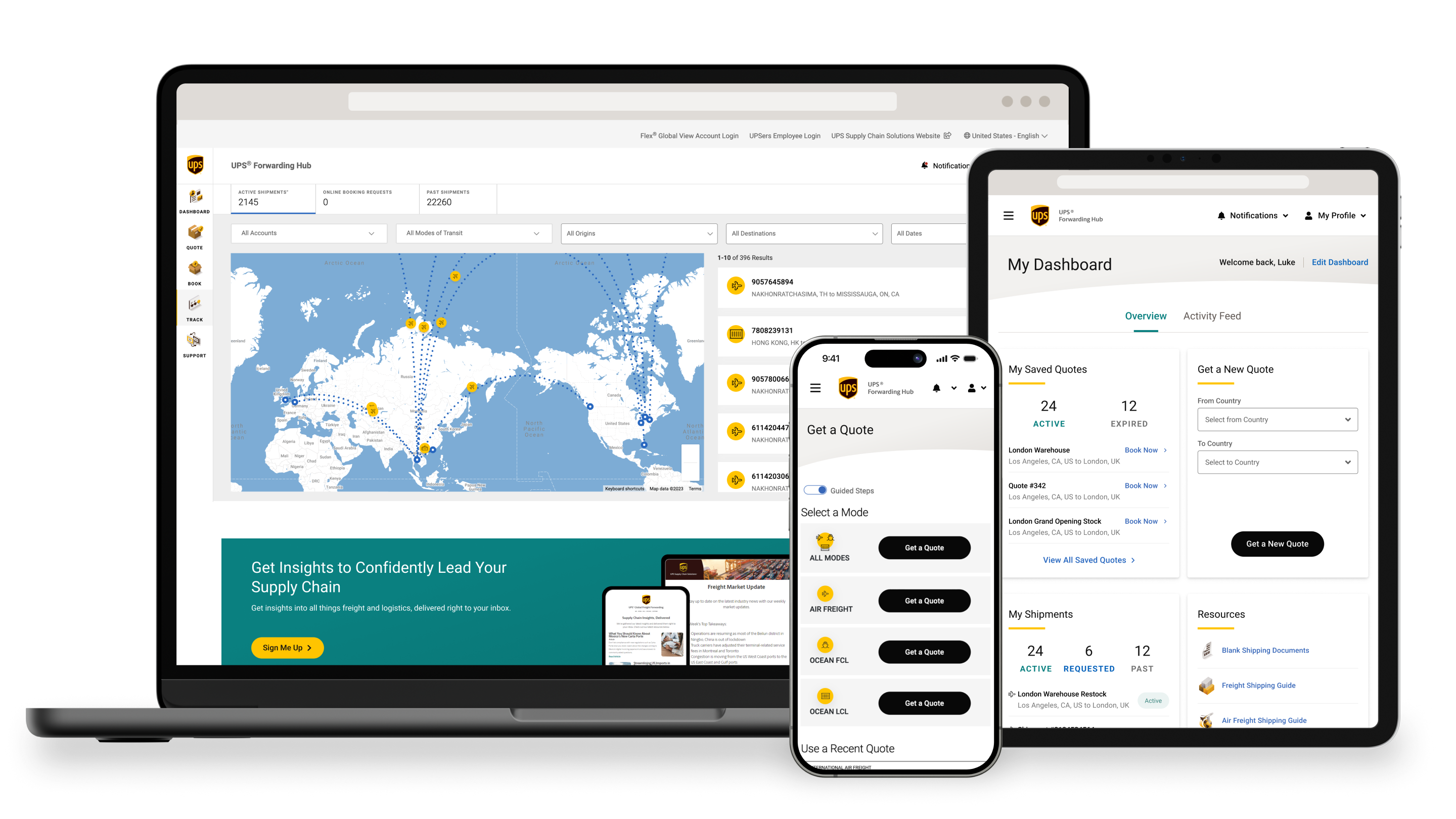
On our UPS® Forwarding Hub, get and compare quotes, book shipments and track them end-to-end on one modern, easy-to-navigate dashboard.

Stay In The Know
Get expert insights into all things freight and logistics, delivered right to your inbox.